7 Roofing Problems That Require Emergency Repairs
Some roofing defects can be monitored and repaired through planned maintenance. Others require urgent professional attention because they leave the property exposed to water, wind or further structural deterioration.
Recognising the difference is important. A small visible defect can sometimes conceal more extensive damage, while continued bad weather may rapidly worsen an already vulnerable roof. Property owners in South Elmsall, West Yorkshire, should arrange an assessment promptly when the roof can no longer provide reliable protection.
Which Roofing Problems Need Urgent Attention?
An emergency repair is generally appropriate when a roofing defect is actively allowing water into the property, creating a risk of falling material or leaving a substantial section of the structure exposed. The following seven problems should not be treated as routine maintenance.
1. A Major or Uncontrolled Roof Leak
A small damp mark may develop slowly, but water dripping through a ceiling or running down an internal wall indicates a more urgent problem. Significant water ingress can spread through insulation, timbers and internal finishes before the full extent of the damage becomes visible.
The point where water appears indoors may not be directly beneath the roof defect. Professional roofers inspect the surrounding covering, junctions and concealed layers to trace the most likely entry route before completing an appropriate repair.
2. Tiles or Slates Missing Across a Large Area
One displaced tile should still be repaired promptly, but several missing tiles or slates can expose a considerable area of underlay and battens. This reduces the roof’s resistance to wind-driven rain and may allow neighbouring coverings to loosen.
Emergency attention may involve securing vulnerable materials, providing temporary protection and assessing whether the supporting battens or fixings have also been damaged.
3. A Fallen Branch or Other Impact Damage
A heavy branch striking a roof can crack tiles, puncture a flat roofing membrane and damage the materials underneath. Even if the impact area appears relatively small from ground level, the force may have affected battens, decking or roof timbers.
The branch should not simply be removed without checking the roof beneath it. A professional assessment can establish whether the damage is limited to the covering or extends into the supporting structure.
4. A Sagging or Distorted Roof Section
A visible dip, uneven roofline or newly distorted section requires prompt investigation. Sagging can be associated with prolonged moisture exposure, weakened timbers, damaged decking or movement within the roof structure.
Replacing surface tiles alone will not correct a loss of support. The affected area must be assessed carefully so that any immediate stabilisation and subsequent repair address the underlying cause.
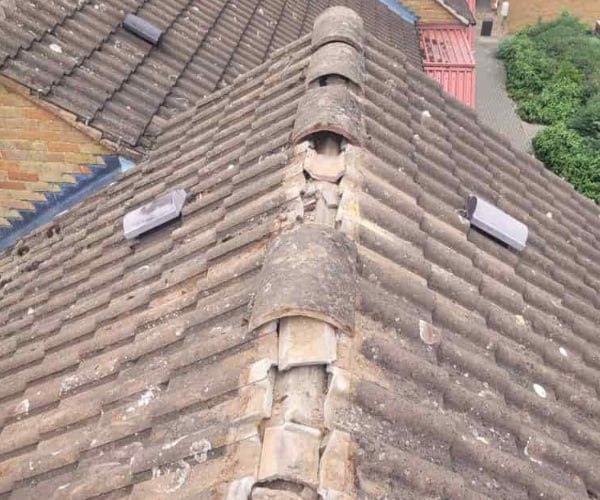
5. Storm-Damaged Ridge, Hip or Verge Materials
Ridges, hips and verges protect prominent edges and junctions on a pitched roof. If tiles or finishing materials become loose during strong winds, water can enter beneath the surrounding covering. Unsecured pieces may also move further or fall.
Emergency repairs can secure the affected area and restore its weather-resistant detail. The roofer should also inspect neighbouring sections because movement in one location may have disturbed materials nearby.
6. Failed Flashing Around a Chimney or Roof Junction
Lead flashing and other weatherproofing details prevent water from entering where the roof meets a chimney, wall or adjoining surface. If flashing lifts, tears or becomes detached, rainfall may be channelled directly into the roof.
Leaks around junctions can spread widely beneath tiles or slates, making the internal damp patch difficult to trace. Professional attention is needed to identify the failed detail and determine whether moisture has affected the surrounding materials.
7. A Torn, Lifted or Punctured Flat Roof Covering
Flat roofs depend on a continuous waterproof surface. A split seam, puncture or lifted section can therefore create a direct route for water into the decking below.
Ponding water near the damaged area may increase the severity of the leak. Prompt repairs can help prevent moisture from spreading beneath the membrane, where deterioration may remain hidden until the deck begins to soften or distort.
What Should You Do While Awaiting a Roofer?
Avoid climbing onto the roof or attempting repairs from a ladder, particularly during rain or strong winds. Roofing materials can be slippery, unstable and more extensively damaged than they appear from below.
If it can be done safely indoors, move belongings away from the affected area and use a suitable container to collect dripping water. Note when the problem occurs and where moisture becomes visible, as this information may assist the inspection. The priority should be arranging professional attention rather than disturbing the roof covering.
How Emergency Roof Repairs Limit Further Damage
The immediate purpose of an emergency repair is to regain control of the situation. Depending on the roof’s condition and the weather, this may involve securing loose materials, temporarily weatherproofing an exposed section or completing a permanent local repair.
A thorough inspection remains important because the most obvious defect may not be the only one. Checking the surrounding tiles, flashing, underlay, battens and accessible timbers helps ensure that connected damage is not overlooked.
Conclusion
Major leaks, widespread tile loss, impact damage, sagging sections, failed flashing and seriously damaged flat roof coverings all require prompt professional assessment. Acting quickly can reduce continued water ingress and prevent a localised defect from affecting a larger part of the roofing system.
WS Roofing South Elmsall provides professional emergency roof repairs in South Elmsall, West Yorkshire. If your roof has developed sudden or serious damage, contact our team to arrange an assessment and the most appropriate immediate response.
Call us on: 01977 804 687
Click here to find out more about WS Roofing South Elmsall
Click here to complete our contact form and see how we can help with your roofing needs.